
Five decades of research and practice
David’s Professional Story
From Classroom Practice to Educational Policy
Conley's career began in public schools. From 1968 through the 1970s, he taught and helped lead alternative public schools in Berkeley, California. He subsequently worked in multicultural education, staff development, district administration, and the Colorado Department of Education before joining the University of Oregon faculty in 1989. Those early experiences gave him sustained exposure to teaching, school organization, curriculum, professional development, and the practical challenges of improving schools from within.
At the University of Oregon, his early scholarship focused on school restructuring, educational leadership, standards, governance, and systemic reform. During the 1990s he became deeply involved in Oregon's efforts to redesign the relationship between high school and higher education. He served as executive director of Oregon's Proficiency-based Admission Standards System, or PASS, an ambitious effort to define what students should know and be able to do for admission to the state's public universities rather than relying solely on traditional course requirements and admissions measures.
That work helped shape a theme that would define much of his subsequent career: the need to connect what happens in high school with what students will actually be expected to do after they leave it.
Defining College and Career Readiness
Beginning in the late 1990s and early 2000s, Conley's work increasingly centered on the transition between secondary and postsecondary education. As a special consultant to the Association of American Universities and later through the Center for Educational Policy Research, he led work designed to identify the knowledge and skills students need to succeed in entry-level college courses. The national Standards for Success initiative helped build an empirical foundation for thinking about college readiness as something more complex than high school graduation requirements or a single standardized test score.
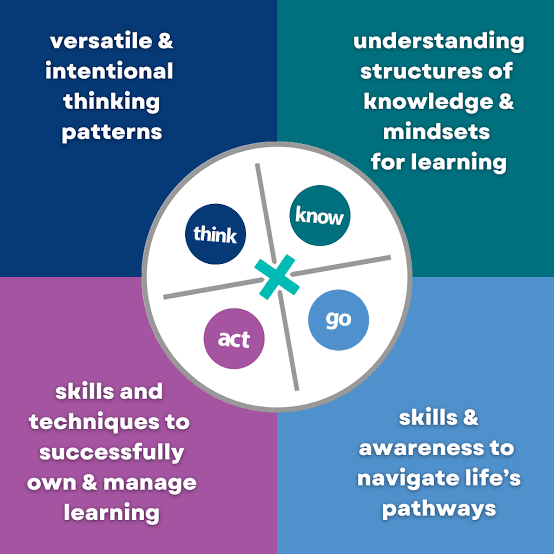
This research eventually led to Conley's multidimensional conception of college and career readiness, commonly represented by the Four Keys to College and Career Readiness: Key Cognitive Strategies, Key Content Knowledge, Key Learning Skills and Techniques, and Key Transition Knowledge and Skills. The framework emphasizes that students need more than academic content knowledge. They also need to be able to reason, solve problems, manage their own learning, understand how postsecondary systems work, set goals, seek help, and navigate increasingly independent educational and career environments.
The Four Keys became one of the more widely referenced multidimensional frameworks for college and career readiness. It has been used by researchers as a conceptual framework for studying postsecondary preparation and transition, by schools and districts to organize readiness initiatives, by college-access and professional-development organizations such as AVID and GEAR UP partners, and by state and national organizations examining assessment, graduation policy, and career readiness.
The model has also continued to evolve in application. Inflexion, the organization that grew out of EPIC, still uses the Four Keys—often summarized as Think, Know, Act, and Go—as a shared framework for helping schools define what readiness means and align school systems around that vision.
Building Research Organizations and Translating Research Into Practice
In 2000, Conley founded the University of Oregon's Center for Educational Policy Research (CEPR), which he directed through 2022. In 2002 he also founded the Educational Policy Improvement Center (EPIC) and served as its chief executive officer through 2014.
Through these organizations, Conley and his colleagues conducted a wide range of large-scale studies involving college and career readiness, assessment, standards alignment, accountability, postsecondary transition, career and technical education, and educational improvement. Projects included national and state studies for the College Board, the National Assessment Governing Board, state departments of education, higher-education systems, foundations, school districts, and international organizations.
His work has included studies of Advanced Placement courses and assessments, college- and career-readiness standards, NAEP preparedness, the Common Core State Standards, career and technical education, International Baccalaureate programs, assessment systems, and measures of student learning and readiness. Over the course of his career, he has led or participated in competitively funded research and development projects supported by organizations including the Bill & Melinda Gates Foundation, the William and Flora Hewlett Foundation, Carnegie Corporation of New York, Lumina Foundation, Pew Charitable Trusts, and the U.S. Department of Education.
A consistent characteristic of this work has been the effort to translate research into usable educational systems—standards, assessments, readiness indicators, performance tasks, school diagnostics, accountability measures, and strategies that educators and policymakers can actually employ.
Assessment, Standards, and Deeper Learning
Assessment has become another major strand of Conley's work. He has studied conventional standardized testing as well as performance assessment, multiple-measure systems, competency-based approaches, and assessments designed to capture deeper learning and transferable skills.
He served as a technical advisor to the Smarter Balanced Assessment Consortium for many years, participated in national committees examining college and career readiness and 12th-grade preparedness, and served on technical advisory committees for organizations including NWEA and Project Lead The Way. He also co-chaired the validation committee for the national Common Core College and Career Ready Standards.
His 2018 book, The Promise and Practice of Next Generation Assessment, argues for moving beyond assessment systems dominated by isolated test scores toward systems capable of providing richer evidence about what students know, what they can do, and how prepared they are for future learning. It followed earlier books including Getting Ready for College, Careers and the Common Core, College and Career Ready, and College Knowledge.
Across this work, Conley has consistently emphasized that measurement should serve educational improvement rather than simply classification or accountability.
Working Across Research, Policy, and Practice
Conley's career has also involved extensive work with policymakers and educational organizations. He has provided invited testimony to legislatures, state boards, commissions, and national panels on topics ranging from school reform and educational governance to assessment, college readiness, accountability, and education finance.
His consulting and research relationships have included organizations such as ACT, AVID, Cambridge Assessment International, the College Board, the Council of Chief State School Officers, International Baccalaureate, Jobs for the Future, NWEA, Pearson, Project Lead The Way, and state education agencies across the country.
This work has required a combination of skills that do not always reside in the same professional role: interpreting research, understanding psychometrics and assessment, analyzing policy, designing practical systems, communicating with educators and policymakers, leading complex projects, and translating between K–12 education, higher education, workforce needs, and public policy.
Current Work
Since becoming Professor Emeritus at the University of Oregon, Conley has continued this work through EdImagine, the educational research and consulting organization he founded in 2010. His recent projects have included assessment and validity work for Cambridge Assessment International and Project Lead The Way, studies of college and career readiness, assessment systems, career readiness, and the relationship between educational programs and postsecondary success. His recent presentations continue to address topics including assessment innovation, college and career readiness, educational pathways, and preparing students for an uncertain and changing workplace.
One of his current areas of development is Insightfull®, a college- and career-readiness system designed to help students understand their current readiness, identify areas they can strengthen, explore possible career directions, and translate assessment results into concrete action. Insightfull extends a central idea that has run through Conley's career: readiness should not simply be something measured at the end of schooling. It should provide students and educators with information they can use to improve readiness while there is still time to act.
A Continuing Focus on What Comes Next
Although the specific projects have changed over time—from school restructuring and proficiency-based admissions to college readiness, deeper learning, assessment systems, career readiness, and educational technology—the underlying purpose of Conley's work has remained remarkably consistent.
Education works best when students understand what will be expected of them, when educators have useful information about student readiness, and when schools and postsecondary systems communicate clear and coherent expectations. Assessment is most valuable when it helps people decide what to do next. And readiness is best understood not as a fixed label, but as a collection of knowledge, skills, strategies, and behaviors that students can continue to develop.
That combination of research, measurement, policy, system design, and practical application remains the focus of David Conley's work through EdImagine.